Adjustable Dumbbells vs Fixed Dumbbells: Which Is Better for a Home Gym?
Adjustable dumbbells vs fixed dumbbells compared honestly: space, cost per pound, change speed and durability — and which one suits your home gym.
Every home gym starts with the same fork in the road. Do you buy adjustable dumbbells — one handle that becomes many weights — or fixed dumbbells, the classic one-weight-per-pair kind you see racked in a row at the gym? Most comparison pages push whichever they earn more from. This one will not: fixed dumbbells honestly win some rounds below, and if those rounds are the ones you care about, you should buy fixed. But for most people training at home, the maths of space and cost is not close. Here is the full picture, factor by factor.
The short answer
Choose fixed dumbbells if you have a dedicated training room with wall space for a rack, you drop your weights at the end of hard sets, and you want equipment that will outlive you with zero moving parts. Choose adjustable dumbbells if you train in a room that also has to be a bedroom, office or living room, you want a full range of weights for a fraction of the cost of buying every pair, and you are happy to set your weights down instead of dropping them. Everything below is the detail behind those two sentences.
Adjustable vs fixed dumbbells at a glance
| Factor | Adjustable dumbbells | Fixed dumbbells |
|---|---|---|
| Space | One tray or a small corner — about the footprint of a carry-on bag | A rack along a wall; a 5–50 lb run is 10 pairs to store |
| Cost | One purchase covers the whole range; lowest cost per usable pound | Every pair is a separate purchase; the total climbs with each 5 lb step |
| Changing weight | Seconds with a dial; about a minute with plates | Instant — pick up a different pair |
| Durability | Dial models have moving parts and must never be dropped; plate-loaded sets are simpler and tougher | A solid single piece — the most drop-proof, longest-lasting format |
| Weight range | One set spans light shoulder work to heavy rows (for example 5 to 52.5 lb, or builds up to 90 lb) | Exactly the pairs you own — no more, no less |
| Extra uses | Plate-loaded sets often convert to a barbell or kettlebell | Dumbbell work only |
| Best for | Apartments, spare rooms, shared spaces, most home lifters | Dedicated garage gyms, heavy lifters who drop weights |
Space: the factor that decides most home gyms
A fixed dumbbell collection is furniture. Covering the everyday range from 5 to 50 lb in 5 lb steps means ten pairs, and ten pairs need a rack, and a rack needs a wall — roughly a metre and a half of it — plus clearance to walk up and pull weights off. In a garage gym that is fine. In a spare bedroom it is the whole room.
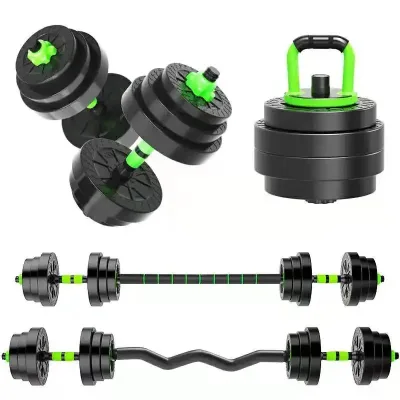
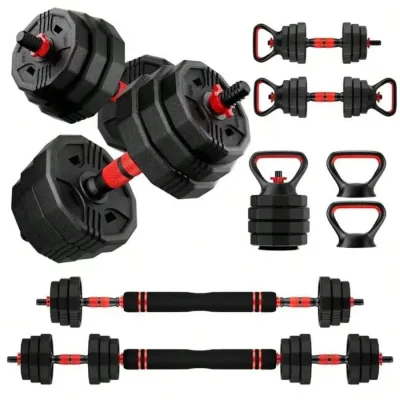
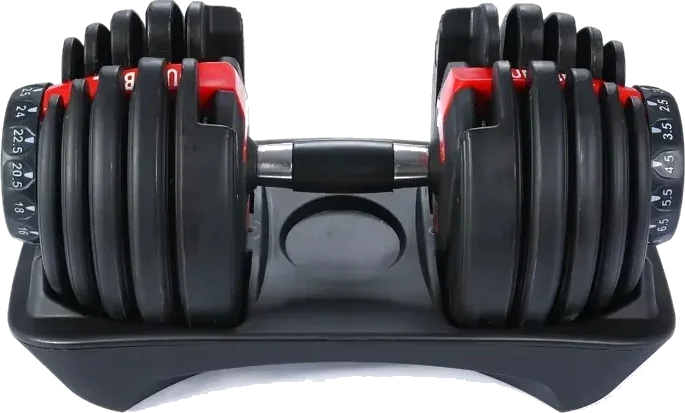
An adjustable dumbbell set replaces that wall with a tray. A dial dumbbell in its tray takes up about as much floor as a carry-on bag, and the plates you are not using stay locked inside it. Plate-loaded sets need a small corner for their plates, and the lightest kits are smaller still — the 2-in-1 Adjustable Dumbbell and Barbell Set, 22 lb stores in a cupboard. If your training space has to disappear when guests arrive, this round is not competitive: adjustable wins by a room.
Cost per pound: one range vs ten purchases
Fixed dumbbells are priced pair by pair, so the honest way to compare is cost per usable pound across the whole range. With fixed dumbbells, every new 5 lb step is another pair to buy, ship and store — the total for a full run adds up to several times the price of a single adjustable set covering the same weights.
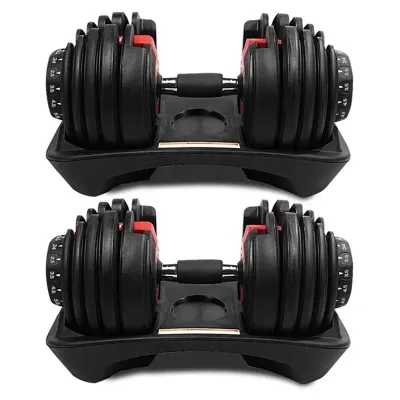
Run the same maths on adjustable sets in this store. The Adjustable Dial Dumbbell, 5 to 52.5 lb covers the range most home lifters ever need for $449. The 4-in-1 Adjustable Dumbbell Set with Connector, 44 lb covers the beginner-to-intermediate range for $91 — and converts into a barbell and kettlebell modes as well, which is three tools' worth of training in one purchase. Fixed dumbbells can match the per-pound value only if you buy very few pairs — which means a narrow range that stops being enough as you get stronger.
Speed of change: grab-and-go vs seconds vs a minute
Fixed dumbbells are the fastest of all: finish a set, put the pair back, pick up the next. There is nothing to adjust. If your training is built on rapid supersets with three different weights, that zero-friction swap is a real advantage.
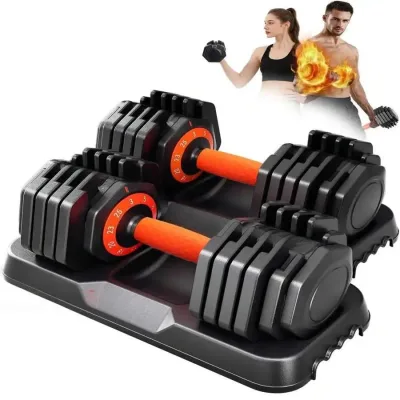
Dial adjustables are close behind. The dumbbell sits in its tray, you turn the dial, and the new weight is ready in seconds — the Quick-Dial Adjustable Dumbbell, 25 or 50 lb offers ten settings in one handle, which makes drop sets and supersets practical at home. Plate-loaded sets are the slowest: you slide plates on or off and lock them, about a minute per change. That is a genuine cost if your rest periods are short, and a non-issue if you train one exercise at a time in straight sets.
Durability: where fixed dumbbells honestly win
This is the round the adjustable side loses, and pretending otherwise would be dishonest. A fixed dumbbell is one solid piece of metal or rubber-coated iron. It has no mechanism, nothing to jam or wear, and it can be dropped on a platform thousands of times. It is the most durable format ever made, and a good set is a lifetime purchase.
Dial adjustable dumbbells trade some of that toughness for their mechanism. The selector system that makes changes instant has moving parts, so the rule is absolute: never drop a dial dumbbell, and always return it to its tray before turning the dial. Treated that way they last for years, but they will never be drop-proof. Plate-loaded sets sit between the two: mechanically simple, with plates and collars you can inspect at a glance, and nothing delicate — though the same set-down-don't-drop habit protects them, your floor and your toes.
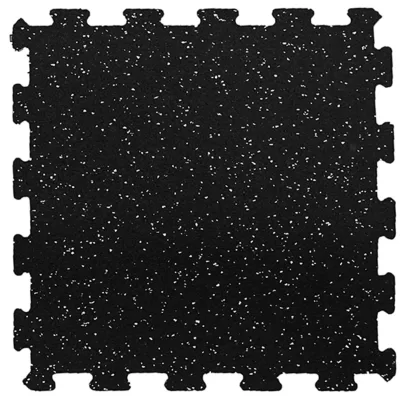
Whichever format you choose, train on a protective surface. A layer of Interlocking Gym Floor Mats, 1/2 in Thick spreads the load when weights are set down, grips your shoes and keeps the noise down for everyone else in the house.
Who should buy which?
Buy fixed dumbbells if: you have a dedicated garage or training room with rack space; you train heavy and drop your final reps; you only need two or three specific weights and rarely change mid-workout; or you simply want the buy-it-for-life option and have the room for it.
Buy adjustable dumbbells if: your gym shares space with the rest of your life; you are still getting stronger and your working weights change month to month; you want one purchase to cover everything from 5 lb lateral raises to heavy rows — the 5-in-1 Adjustable Dumbbell Set, up to 90 lb builds 20, 30, 45, 70 or 90 lb for lifters whose rows and deadlift variations keep climbing; or you want extra tools from the same purchase, like the barbell and kettlebell modes of the convertible plate-loaded sets.
Still deciding how much weight you actually need before you choose a format? Our adjustable dumbbell weight guide walks through the right ceiling exercise by exercise. And if you are ready to compare the adjustable range itself, browse the full collection of adjustable dumbbells — every order ships within the contiguous United States, most arrive in 3 to 7 business days with tracking emailed, and details are on the shipping policy page.
The verdict
Fixed dumbbells are the toughest, simplest weights ever made — and the wrong choice for most homes, because homes run out of wall long before lifters run out of progress. Adjustable dumbbells give up drop-ability and gain everything else: the full range, in one tray, for one payment. Decide which trade you are actually making, then browse the adjustable dumbbells range and pick the set whose ceiling sits above your strongest lift.
Questions & answers
Are adjustable dumbbells worth it compared to fixed dumbbells?
For most home lifters, yes. One adjustable set replaces up to ten pairs of fixed dumbbells, costs far less per usable pound, and fits in a corner instead of along a wall. Fixed dumbbells are worth it when you have the space and specifically want drop-proof, zero-mechanism equipment.
Can you drop adjustable dumbbells like fixed dumbbells?
Dial models, no. Their selector mechanism has moving parts and dropping can damage it — always set a dial dumbbell down in its tray. Plate-loaded sets are mechanically simpler and hardier, but setting weights down on mats is still the right habit for the equipment and your floor. Fixed dumbbells are the only format built to be dropped.
Do adjustable dumbbells feel different from fixed dumbbells?
Slightly. Dial dumbbells are usually a fixed handle length regardless of the weight selected, and plate-loaded sets are a little longer than a fixed dumbbell of the same weight. Most lifters stop noticing within a session or two, and the balance in the hand is designed to feel like a conventional dumbbell.
Are adjustable dumbbells cheaper than a fixed set?
Across a full range, yes, by a wide margin. A fixed run from 5 to 50 lb is ten separate pairs to buy; a single adjustable set covering the same range is one purchase — in this store, from $49 for a 22 lb starter set to $449 for a dial dumbbell covering 5 to 52.5 lb.
How long do adjustable dumbbells last?
Plate-loaded sets are simple metal and collars, and last for years with no maintenance beyond keeping them dry. Dial dumbbells also last for years when they are set down rather than dropped and returned to the tray before the weight is changed — the mechanism is the only delicate part, and it is protected by that one habit.
Which is better for beginners: adjustable or fixed?
Adjustable, in most cases. Beginners progress quickly and unpredictably — a weight that challenges your rows this month is your warm-up in three months. An adjustable set grows with you, while fixed pairs force a new purchase at every step. Beginners on a tight budget usually start with a plate-loaded set in the 22 to 44 lb range.
Can adjustable dumbbells replace a full dumbbell rack?
For one person training at home, yes — that is exactly what they are designed to do. A rack still makes sense in a shared or commercial space where several people need different weights at the same time, which is not the trade-off a home gym faces.